
A short guide to gasless transactions for web3 developers
December 12 2025
Web3 developers aim to build experiences that feel fast, intuitive, and ready for mainstream users. Yet many users still encounter friction the moment they try to interact with smart contracts or any onchain feature. Gas fees remain one of the biggest blockers across web3 gaming, apps, marketplaces, and DeFi.
Gasless transactions offer a simple solution that removes this friction entirely. They allow users to interact with a blockchain without holding a native token.
This enables better onboarding, smoother UX, and a more unified cross-chain flow. Below is a short guide that explains exactly what gasless transactions are, and why they matter for your web3 experience.
What’s the problem with gas fees?
A typical onchain transaction requires users to pay a fee in the native asset of the chain they are using. This creates several problems across web3 games, apps, and blockchain platforms.
Users must hold native tokens first. Before a user can mint an NFT or complete a marketplace purchase, they need the native token. This stops onboarding instantly.
Network fees are unpredictable. Transaction fees shift based on network activity. This makes forecasting difficult for any web3 payment flow or web3 wallet experience.
Multi-chain products become complicated. If your ecosystem spans more than one chain, users need different native assets on each of them. This breaks the simplicity of a unified onchain experience.
It interrupts the experience. Even small interruptions ruin immersion and engagement. When players or users must leave the game or app to find tokens, they are more likely to drop off.
These pain points make traditional gas flows one of the most common sources of confusion and churn across the web3 ecosystem.
What is a gasless transaction, and how does it solve these issues?
A gasless transaction allows the user to sign intent, while the application or a relayer pays the gas behind the scenes. The user does not need to hold the native token, and the flow feels similar to a normal in-app action.
Why this matters for web3 development
- Removing onboarding friction. Users can mint NFTs, join game sessions, or complete a crypto checkout without needing to hold a native token to pay gas.
- Improving conversion and retention. With no mandatory gas payment step, more users complete their first onchain action and will remain in your app experience.
- Supporting chain abstraction. Users can interact across multiple networks through a single wallet without thinking about different chain requirements.
- Making your payment flows consistent. Users can buy items, claim rewards, or move assets across many chains with one simple flow. They never see the underlying steps and the process feels familiar.
- Expanding app design. Features like issuing badges, tracking engagement, powering loyalty systems, or handling micro interactions become simple because users never pay gas.
Common methods for enabling gasless transactions
Gasless execution is a theme with multiple technical approaches. Each method offers different tradeoffs, and developers often use several of them depending on different circumstances or flows. Below are the most common tools available today.
1. ERC 4337 bundlers and paymasters
Account abstraction packages user intent into user operations. Bundlers submit these operations, while paymasters sponsor the gas. This allows flexible rules for sponsorship and removes the need for users to hold native tokens.
2. Permit-based methods
Users sign a permit that authorizes an action. A service submits the actual transaction and covers the fee. This creates fast, lightweight flows for token transfers, mints, and custom contract logic.
3. Relayer-based execution
Users sign intent in the wallet. A relayer broadcasts the transaction onchain and pays the gas on their behalf. This model is widely used and is often combined with permit logic for fully streamlined experiences.
Relayer-based execution: diving into the details
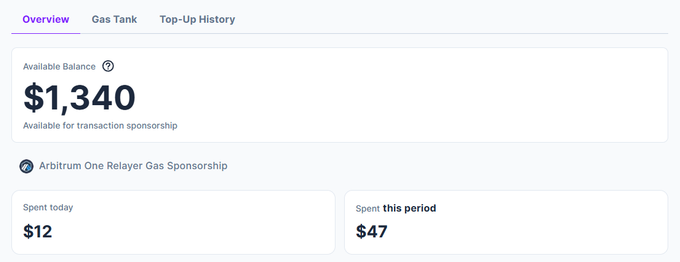
Integrating gasless transactions simplifies payments and creates a smooth, connected onchain journey across your entire product.
If you are building crypto games, marketplaces, DeFi features, or cross-chain user flows, the goal is to make user interactions feel instant and effortless.
Below are examples of how web3 developers can add gasless capabilities with a relayer-based execution to improve the user’s end-to-end experience.
- Enable a web3 wallet that validates intent and signs meta transactions. This lets users interact with your app without holding the native token of any EVM chain.
- A relayer can then broadcast the transaction on behalf of the user. Your application or a sponsored service covers the fee, so the user completes the action with no extra steps while your backend handles settlement.
- Contracts need logic that accepts actions sent through a relayer. This can be done through meta transaction verification or through tools provided by a modern web3 development platform. Once in place your entire experience can support low-friction interactions.
- Gasless design also allows building UI paths that feel natural for users. They can claim NFTs, buy items, join events, or complete cross-chain actions without any interruptions. Every interaction feels like a standard in-app flow rather than a blockchain process.
- With abstraction layers active, users no longer switch networks or manage native tokens. Apps can operate across many chains while behaving like one unified environment. This is especially valuable for multi-chain ecosystems that want a single, consistent user journey.
Once gasless execution is live, devs can unify all their onchain features. Marketplace actions, crypto checkout, stablecoin payments, participation flows, and progression systems can all run with the same smooth feel.
Sequence can help you integrate gasless transactions
Sequence provides a fully unified web3 platform created for games, apps, and consumer experiences. It gives developers everything they need to build smooth, accessible onchain interactions. Gasless support is a core part of how Sequence empowers teams.
Smart contract wallet designed for gasless interaction. The Sequence Wallet uses a smart contract architecture that makes meta transactions natural and seamless. Users can interact immediately without native tokens.
1-click payment rails. Thanks to Trails, the universal intents platform for 1-click crypto transactions powered by Sequence, you can guide users through purchases and onchain actions without exposing gas steps. Trails handles stablecoin payments, crypto checkouts, NFT minting, and multichain interactions in a single smooth flow, so users complete transactions instantly, while all gasless logic runs behind the scenes. You can also pay gas in any permit-compatible token (which is most ERC-20 tokens, like USDC), so you don't have to have the native token.
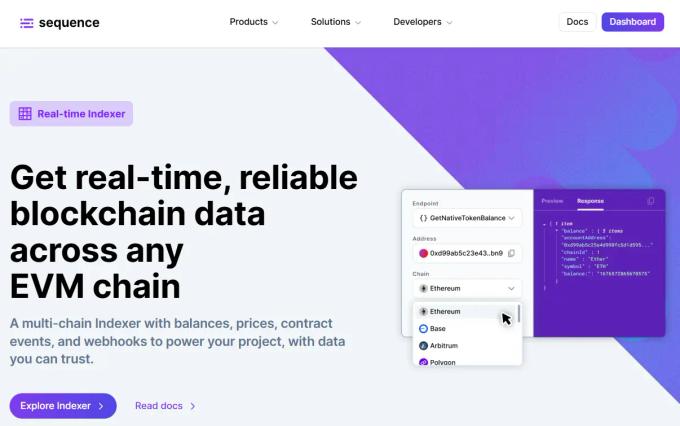
Sequence Indexer for fast, accurate data. The Sequence Indexer provides real-time onchain data that powers inventory systems, logic, and marketplace events. Developers get instant access to user states, asset balances, NFT metadata, and contract events without having to build a custom indexing backend. The Indexer keeps your experience in sync during gasless execution, multi-step flows, and high-traffic app moments.
Fully integrated, modular web3 stack. Wallet, relayer, marketplace tools, and developer APIs all work together. This removes the typical friction when stitching together different services.
Visit sequence.xyz and learn how to unlock gasless interactions, unified cross-chain flows, and a powerful modular stack designed for modern web3 development.
Sequence makes building onchain simple. Developers and teams can launch, grow, and monetize apps with unified wallets, 1-click cross-chain transactions, and real-time data, all in a modular and secure stack. No more stitching together fragmented tools or battling poor user flows. Sequence is production-ready infrastructure that helps teams ship faster, onboard more users, and scale confidently. From chains and stablecoins to DeFi and gaming, Sequence powers developers and applications across the EVM ecosystem with billions in transaction volume and millions of users. Trusted by leaders in blockchain, Sequence powers today’s onchain apps and delivers future-proof infrastructure for tomorrow’s breakthroughs. Learn more at sequence.xyz.


Written by

Sequence team
Sequence logoShare this article


Related Posts
Today marks a major milestone: Polygon Labs is acquiring Sequence.
In partnership with KOR Protocol, Sequence and Msquared, Black Mirror's franchise has launched the $MIRROR token and a new web3 experience!
Web3 payment flows allow any app to embed onchain purchases and interactions in a way that feels natural for users. Learn more about them!

As more applications and protocols move onchain, indexers redefine how dev teams access, organize, and use blockchain data. Learn how!